
What Does Being Radical Mean?
A La Paulo Freire


Thank you so much for subscribing to my newsletter. In this third issue of my weekly newsletter, I offer my discussion of Radicality as theorized by Paulo Freire in his book Pedagogy of the Oppressed. I also augment the written text with a video on the same topic. I hope both of these combined will help you understand what it means to be radical. Trust me, it is not necessarily what we usually assume to be radical.
The article included in the Notes and Commentary section gives you some practical suggestions about teaching (and maybe reading) Mohsin Hamid’s The Reluctant Fundamentalist.
I do hope you find these writings and related videos useful. Please also take a few moments to let me know what you think and share any suggestions or queries.

Being Radical
The term being radical is often used to connote a negative transformation of a person and is often conflated with radicalization. We have often heard and read the terms Islamic Radicalism (I am guilty of using such terms in my published work) or environmental radicalism. In pretty much all its usages the term signifies something negative and unwanted.
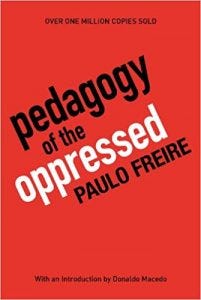
Here, however, I want to introduce the term being radical in its most positive and transformative iteration, as discussed by Paulo Freire in his book Pedagogy of the Oppressed.
Sectarianism Versus Radicalism
Sectarianism, for Freire, “turns reality into a false (and therefore unchangeable) ‘reality’” (37). Radicalism, conversely, “criticizes and thereby liberates” (37). Freire enumerates and elaborates two kinds of sectarianisms: The rightist sectarianism and the leftist sectarianism. According to Freire, a rightist sectarian hopes to accomplish the following:
The rightist sectarian . . . wants to slow down the historical process, to “domesticate” time and thus to domesticate men and women. . . . For the rightist sectarian “today” linked to the past, is something given and immutable. (38).
The leftist sectarian, according to Freire, “goes totally astray when he or she attempts to interpret reality and history dialectically and falls into essentially fatalistic positions” (38) and hence, for the leftist sectarian “‘tomorrow’ is decreed beforehand, is inexorably preordained.” (38).
Being radical, therefore is to take a position against both these extremes and a radical, for Freire, is someone who can see beyond the past-present constraints of the rightist sectarian and the fatalistic embrace of a future foretold of the leftists sectarian. Frieir explains this in the following words:
The radical, committed to human liberation, does not become the prisoner of a “circle of certainty” within which reality is also imprisoned. On the contrary, the more radical the person is, the more fully he or she enters into reality so that, knowing it better, he or she can better transform it. (39)
Thus, being radical is beyond rightist or leftist reactionary positions and is inextricably linked to “knowing” the world and then with that knowledge attempting to transform it. The past does not determine the present and the future, in such radical praxis, is always changeable with a liberatory praxis. Freire explains some of the attributes of a radical person, and in his words, a radical person:
Is not afraid to confront, to listen, to see the world unveiled.
Is not afraid to meet the people or to enter into dialogue with them.
Does not consider himself or herself the proprietor of history or of all people, or the liberator of the oppressed; but he or she does commit himself or herself, within history, to fight at their side. (39)
Thus, it can be said, that being radical first means being open to change and then developing the ability to work in solidarity with the oppressed to change the reality so that every one can live in this world in peace and with dignity. Anyone who meets these criteria is radical!


Teaching Mohsin Hamid’s The Reluctant Fundamentalist
Introduction
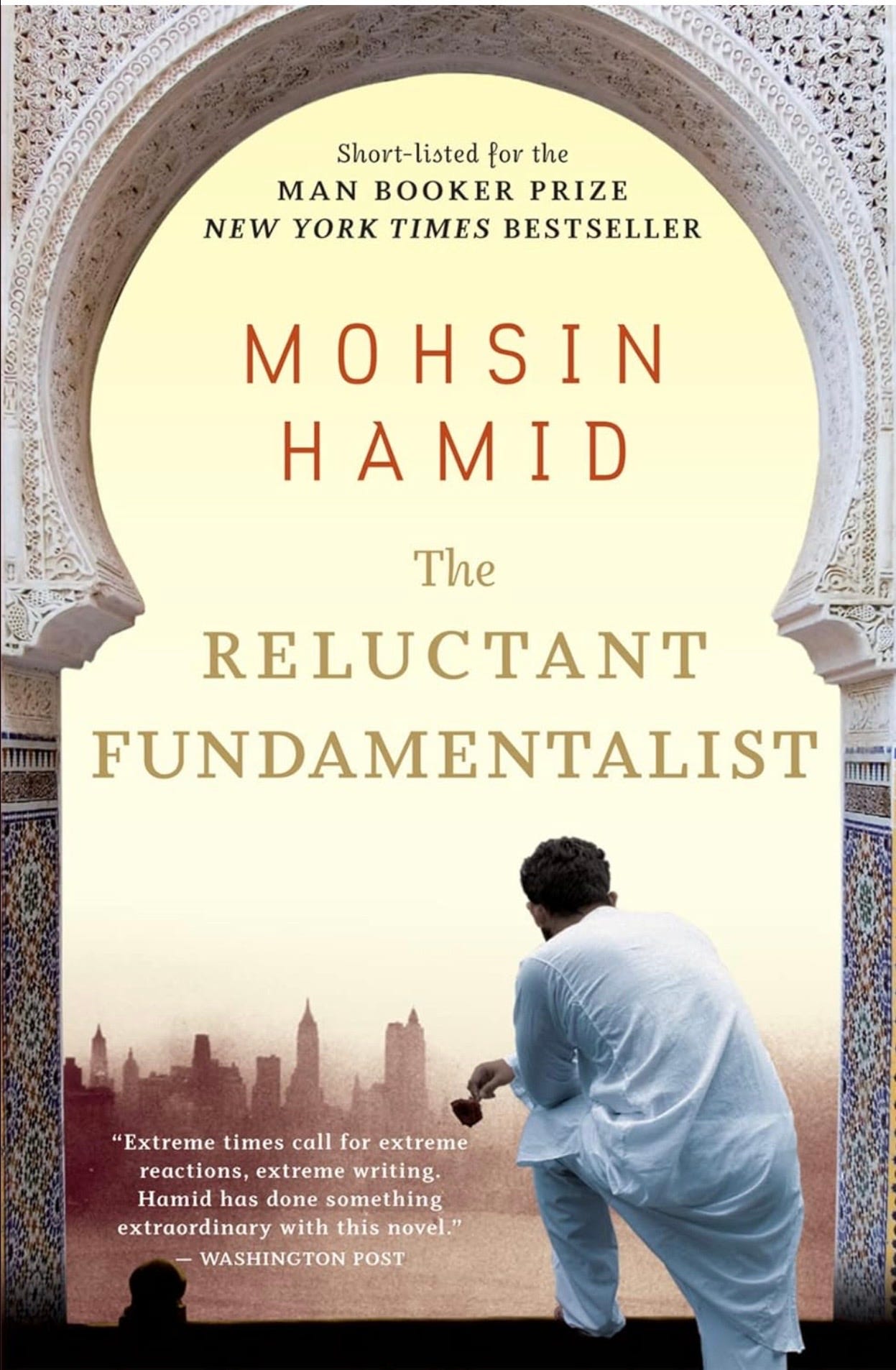
For the past few weeks, I have been teaching The Reluctant Fundamentalist to my 11th grade high school students. Needless to say, it has been an amazingly rich experience to teach the novel in a high school setting. On the whole, I found my students to be highly engaged and curious about the novel and the culture and history that it represents. This brief article is a sort of guide about teaching the novel.
Do the Background Work First
As I started teaching the novel, I soon realized that I needed to do some additional background work about the novel as well as about the practice of critical reading. This may not be necessary at college level, but I think it is a necessary step in teaching a postcolonial novel at high school level. Following were some of the activities we did in our class:
I went over the close reading techniques with my students, which involved reminding them to look at the novel and its constitutive formalistic parts such as the plot, the setting, the characters, the tone and point of view.
I also gave them some background information about Pakistan and its recent history of relationships with the United States.
We also spent some time on the tragedy of September 11, 2001 and the subsequent US invasion of Afghanistan. We also discussed other US military involvements in the world.
We learned about the F1 student visa processes and the complexities of obtaining and retaining and H1B work visa by international students.
Most importantly, we also researched Lahore as a historical city and tried to learn about Lahore-related things mentioned in the book.
I think this background work is important to enable our students to experience the text but also in understanding the worldly realities that determine a text like The Reluctant Fundamentalist. In my case, it turned out to be a salutary practice, as my students engaged with the text with a nice grounding in the history and cultural nuances about the subject matter. In a way, then, this background knowledge enabled me to stay true to my own stated, published position on literary studies:
A novel/ text should not just be a point of arrival but rather a point of departure into the larger questions of cross cultural understanding.
Avoid Huge Generalizations
Because of their previous training, most of my students tended to read the narrator and his “silent” American narratee/ listener as stand ins for Pakistan and America. It took some effort to convince them to read each as individual character within the greater structures of US global power.
Why not to read them as two human analogs of their respective cultures and countries? Well, as postcolonialism I am trained to look at the particularities of cultures, even when discussing their imperial histories. I believe that larger, generalized claims can be made but only after we have carefully planted our thought with a clear understanding of discursive structures within which a sign is produced. Without the necessary scaffolding, we will end up erecting universal stereotypes of both cultures, and stereotypes always tend to erase the individual particularities in the service of the dominant groups. Furthermore, no single character can, or should be expected to, carry the burden of an entire culture.
So, in my class discussion we talked about Changez as part of the urban, educated middle class of Pakistan and not as a total representation of all Pakistanis. Similarly, I guided my students to use the narrator’s descriptions and references to his American listener as clues to construct a sort of character image of the specific American in the story.
Identity, Cultural Memory, and Empire
In our class discussions, Changez’s shift from that of an ambitious young worker to someone troubled by his own role in the larger structures of exploitation became an important topic. My students pointed to several moments in the novel that, sort of, prompted Changez to rethink and reevaluate his life, but two of those instances were probably the most important: The gaze of the Jeepney driver in Manila and Changez’s lunch conversation with Juan-Bautista in Chile.
In the first instance, while Changez along with his American colleagues is traveling in a limousine to his hotel, he sees a jeepney driver looking at him with intense hatred. Changez first does not understand the reason for this hateful gaze, but after a bit of reflection he realizes that in him, the driver saw a tool of the exploitative American empire. This knwoledge makes him think about how his attitude had changed and how he had already started treating the natives of Manila, especially those whose firm he was evaluating, in the similar patronizing manner as his other American colleagues did.
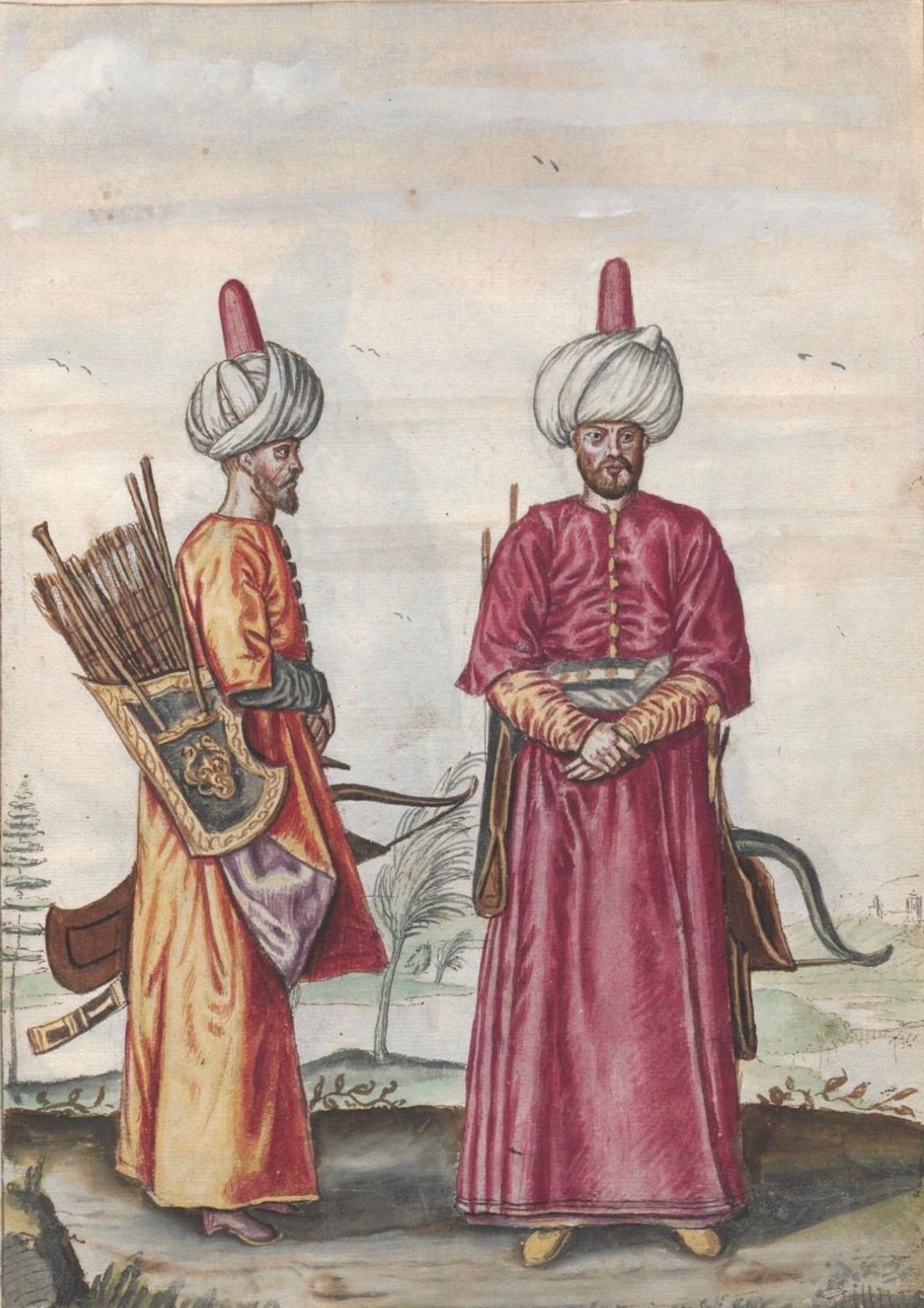
In the second instance, while evaluating a publishing firm in Chile, Changez starts seeing himself as a minion of the US empire and this feeling is brought to surface when he goes out to lunch with Juan Bautista, the manager of the firm being evaluated. In their conversation, Juan-Bautista asks Changez if he knew about the jenessaris? Juan-Bautista then tells him that the jenessaries were Christian orphans captured or taken by the Ottoman empire and trained to be the most loyal soldiers of the Sultan, and since they had no memory of their own culture, they eventually became the most potent tool of the sultan against his Christian foes. Now, suggest Juan-Bautista, if they had some memories of their own religion and culture, the jenessaries probably would have not been so blindly loyal to the Ottoman empire. Thus, in views of Juan-Bautista, Changez was a modern-day jenessary, working for a corporation whose actions impacted the every-day lives of Changez’s own people.
This second experience, thus, becomes a turning point for Changez, for it prompts him to give up his job and thus stop acting as a tool of the US empire and, in a way, it could be termed the climactic point of the novel where the story turns and we find our narrator deciding to give up his career and move back to Pakistan.
On a larger scale, these two expereinces of the narrator also emphacize thew significance of indiaviual and cultural memory, for if we are grounded in our primary cultures, it become shardeer for the metropolitan powers to completely eraze our identies and replace them with identities invested in the project of the ipmerial powers themsleves.
The American
The American listener does not speak in the novel, which in a way could be read as the symbolic silencing of the dominant American voice, but I tend not to read it like that. All we learn about the American is from the narrator’s poerspective, which implies that the American is “spoken for” or spoken about. So, the reader has to guess from bits and pieces of the description or expressions attributed to the American by our narrator.
I will soon offer a detailed account and discussion of various snippets from the novel that provide us information (factual or construed) about the American, but here it is enough to suggeste that this aspect of the novel where the American is “spoken for” or “spoken about” could very easily be read as a reversal of the traditional colonial practices where the colonized, or any other dominated group, do not speak but are spoken for. In simple terms we could read it as a symbolic silencing of the dominant voice and priveliging of the peripheral voice that would otherwise be silent in mainstream, western narratives.
Conclusion
Overall, I find this novel to be a wonderful tool in reminding us about the power of United States, especially in incorporating the global talent within the logic of the empire and the price that we all must pay to break the imperceptible but persistent strings of power that bind us to the interest of the powerful. I will soon have more on this novel both in writing and on my Youtube


Thank you so much for joining me here. As always, your presence means a lot to me. Please feel free to share your ideas and suggestions and if you like my writings, please pass these on to others.
Peace and Love!
This is a very insightful discussion on postcolonial thought. I appreciate how it highlights the ongoing relevance of postcolonial theory in understanding power, identity, and cultural representation. It reminds us that postcolonialism is not just about studying the past, but about questioning how history, language, and ideology continue to shape our present realities. Thank you for encouraging such critical and reflective engagement with these important ideas.
I always used to think the term in a negative connotation. A positive approach not clicked before...Thank you for bringing this up